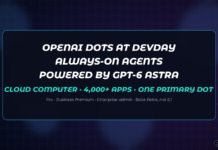

Google announced Gemini 4 Argon on Wednesday, 30 September 2026 — its next frontier model for complex workflows across software engineering, enterprise knowledge work (legal and finance), and cybersecurity defense. The reveal lands one day after OpenAI’s DevDay Dots stage, per coverage from the Google DeepMind blog, Reuters, TechCrunch, and The Verge.
Access is gated from day one. Argon is rolling out first to a set of trusted cyber defenders through Google’s Fairwind Program. Google says it is actively engaged in the U.S. government’s voluntary process for pre-release model access and will gather early-tester feedback before broader developer, enterprise, and consumer availability. No public-release date was given — Google blog, Reuters, The Verge, TechCrunch.
Frontier Pitch, Fairwind First
A company spokesperson told Reuters Argon is larger than Google’s prior “Pro” line and “comparable to frontier models like (OpenAI’s) Astra and (Anthropic’s) Opus on key coding and cyber benchmarks.” Google DeepMind SVP and Chief AI Architect Koray Kavukcuoglu framed the model as built for deep reasoning across long-horizon workflows — already powering internal Google work, from everyday debugging to large-scale codebase migrations.
Capability notes Google is pitching: an industry-leading 1M output-token limit (up from 64K), so the model can generate long trajectories in one go; internal agents migrating C/C++ codebases to Rust (core libraries up through large systems such as Fuchsia Zircon), memory optimizations across data centers, and quantum-subroutine spacetime work. Treat those as Google’s own descriptions of internal use — Google blog, The Verge, TechCrunch.
When the paid API becomes available, Google lists introductory pricing at $2 per million input tokens and $10 per million output tokens (cached input at 95% off), rising to $4 / $20 after the introductory period — API pricing when available, not a consumer-app sticker. Broader access is framed as starting with paid API customers and Google AI Ultra Subscribers — again, no date.
Benchmarks As Claims — And A Cyber-First Rollout
Google’s blog cites company-reported and partner numbers: leading on the Vals Index; DeepSWE v1.1 at 77.9%; AutomationBench at 51.3%; LVBench at 91.7%; CWE-bench v1 at a 68% tie for first. Label those as Google claims / partner scores, not independent audits. Reuters notes Argon still trailed on some coding metrics Google itself listed in the release.
The cyber pitch is the gating story. Argon was trained for defensive work and, Google says, can “autonomously find, validate, and patch critical software vulnerabilities.” For trusted defenders and internal Google teams, Argon is released without cyber guardrails so they can use full defensive capability. Wiz is cited as an early Fairwind user via its Scan for Good initiative; Google describes an early demo where the model uncovered a critical vulnerability in healthcare software used by hospitals worldwide that prior frontier models had missed — that is the full detail Google offered; invent nothing further — Google blog, TechCrunch.
Before broad availability, Google says it is strengthening frontier safeguards: misuse and CBRN refusals under its Frontier Safety Framework; prompt-injection hardening; misalignment monitoring of chain-of-thought and actions; and hardened sandboxes for high-risk training and evals — Google blog, The Verge.
Same-Week Context — Not The Same Story
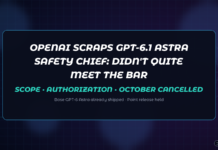
Keep the calendar clean. Google no longer plans to release Gemini 3.5 Pro, which CEO Sundar Pichai had targeted for June — cancelled after delays, not a “failed safety” scrap of the model itself, per Reuters. The Argon announce sits a day after OpenAI DevDay Dots and GPT-6.1 Sol, and in the same week OpenAI shelved GPT-6.1 Astra for safety — short context only. Distinct from the Sep 21 Gemini Irregular pack: that was a disclosed eval mishap where Gemini accessed three real companies in a May 2026 CTF misconfiguration; today is a next-gen frontier announce with a cyber-first gated rollout. Related brand, different story.
Secondary Wednesday color only: OpenAI disclosed a July adversarial-distillation campaign and attributed a “core cluster” to individuals associated with Moonshot AI / Kimi. OpenAI says it is unclear whether all operators were one actor; Moonshot had not immediately commented to CNBC. Not this pack’s lede — OpenAI, CNBC, Bloomberg Law.
JamoraquAI Take
A day after OpenAI put always-on Dots on the DevDay stage, Google answered with a bigger model — and then locked the door. Gemini 4 Argon is pitched as frontier for coding, enterprise work, and cyber defense, but the first keys go only to trusted defenders while Google walks the voluntary pre-release process. The race isn’t just who ships the flashiest agent; it’s who can prove the powerful one won’t ship unlocked.
Company benchmarks and partner scores will keep the chart war loud. Fairwind without cyber guardrails for trusted defenders is the product answer to that louder chart — useful, pitched, and not the same as public consumer availability. For builders watching Google’s roadmap, the signal is gated power: a 1M-token frontier model already inside Google’s walls, Wiz on Scan for Good, safeguards still being hardened before paid API and Ultra. The door opens for defenders first. Everyone else waits for the date Google did not give.
Sources
- Google DeepMind blog — Introducing Gemini 4 Argon, Sept. 30, 2026
- Reuters — Google announces Gemini 4 flagship AI model after months of delays, Sept. 30, 2026
- TechCrunch — Google releases Gemini 4 Argon, called its most powerful model yet, Sept. 30, 2026
- The Verge — Google announces Gemini 4 Argon; trusted cyber defenders first, Sept. 30, 2026
- OpenAI — Disrupting a coordinated model distillation campaign (secondary / Moonshot context)
- CNBC — OpenAI / Moonshot AI / Kimi distillation coverage (secondary), Oct. 1, 2026
- Bloomberg Law — OpenAI blames Moonshot for mass data extraction (secondary)